Rules Are Tools: How Deep Craft Knowledge Sets You Free to Break Things Beautifully
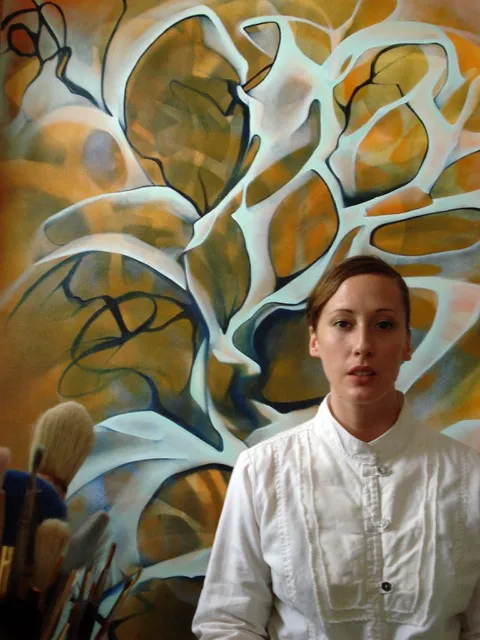
Photo: DArchuletta, CC BY-SA 4.0, via Wikimedia Commons
There's a version of creative freedom that looks like skipping the boring parts — jumping straight to the expressive, the weird, the rule-bending stuff. It's appealing. It's also kind of a lie.
The creatives who actually make work that stops people mid-scroll, mid-step, mid-sentence? They almost always have the same story underneath the surface. Years of grinding through fundamentals. Stacks of sketchbooks nobody will ever see. Hours of practice that felt like anything but freedom. And then — only then — the breakthrough that looked effortless from the outside.
That's the paradox. You have to earn the right to break the rules. Not because some gatekeeper decided so, but because breaking something effectively requires knowing exactly what you're breaking and why it existed in the first place.
The Difference Between Ignorance and Rebellion
Here's a distinction that matters a lot in creative work: there's a massive gap between not knowing a rule and choosing to ignore it.
When you don't know the rule, you're just stumbling around in the dark. Sometimes you hit something interesting by accident. But you can't repeat it, can't build on it, and can't teach it to anyone else. It's luck, not craft.
When you know the rule and decide to break it anyway — with intention, with awareness of the consequence — that's where the interesting stuff lives. That's where Coltrane was when he blew past traditional chord structures. That's where Saul Bass was when he stripped movie poster design down to near-abstraction at a time when everyone else was piling on photorealistic illustration. They weren't being careless. They were being precise in a different direction.
The rebellion was informed. That's what made it land.
What "Mastering Your Medium" Actually Means
Mastery gets romanticized in weird ways. People picture it as some distant mountaintop — a place you arrive at after ten thousand hours where suddenly everything clicks and you're untouchable. But that's not quite right.
Mastery is more like a working vocabulary. The deeper your technical knowledge, the more options you have available in any given creative moment. A designer who genuinely understands typography — the history of it, the mechanics of why certain letterforms work together, the psychology behind how type sets emotional tone — has a completely different toolkit than someone who just knows how to pick a font from a dropdown menu.
Both of them can make something. Only one of them can make a choice.
That's what craft knowledge actually gives you: the ability to make choices that are real choices, not just accidents or defaults. And once you have that, breaking convention becomes a genuine creative act rather than a happy mistake.
Case Study: The Painter Who Learned to Draw Before She Learned to Smear
Take someone like Jean-Michel Basquiat. The surface read of his work — chaotic, raw, scrawled, almost feverish — can make it easy to assume he was just pouring unfiltered energy onto canvas. But that reading misses everything.
Basquiat was deeply literate. He absorbed art history, medical anatomy texts, street signage, music theory, and the visual language of New York City with obsessive intensity. His apparent disorder was constructed disorder. The crossed-out words, the anatomical diagrams, the fragmented text — those choices were deliberate. He knew what a "finished" painting was supposed to look like, and he rejected that finish on purpose, using the rejection itself as meaning.
You can't do what Basquiat did from a place of ignorance. The work only communicates because he understood the thing he was dismantling.
The Discipline Loop Most People Skip
Here's the part that's genuinely hard to talk about without sounding preachy: the discipline phase is not glamorous, and our current creative culture doesn't celebrate it enough.
We celebrate the output. The finished campaign, the viral brand identity, the installation that breaks the internet. We don't celebrate the ten years of figure drawing, the thousand failed logo concepts, the design systems built and rebuilt until the logic was airtight. But that invisible work is the engine.
For any creative professional building a practice — whether you're a graphic designer, an illustrator, a photographer, an art director — the discipline loop looks something like this:
- Learn the convention. Understand why it exists, not just that it does.
- Practice it until it's boring. Boring is actually the goal here. You want the fundamentals to become automatic.
- Start noticing where it feels wrong. Your instincts will start flagging places where the rule doesn't serve the work.
- Break it deliberately. Make the break visible. Make it mean something.
- Rebuild the loop. Because there's always another level.
This isn't a one-time progression. It's a cycle you run over and over across your whole career.
The Freedom on the Other Side
Here's what nobody tells you about getting deep into craft: it doesn't feel more restrictive over time. It feels more free.
When you're early in your development, you're constrained by what you don't know. You're guessing. You're hoping the thing you made looks intentional when really you just got lucky with a color combination or a composition that happened to work. That uncertainty is its own kind of cage.
But when you've put in the time — when you know why that color combination works, when you can articulate the compositional logic, when you can make it happen again on demand — you're operating from a completely different position. You can take risks because you understand the risk. You can push the work into uncomfortable territory because you know how to pull it back if you need to.
Mastery doesn't limit expression. It expands the range of expression available to you.
What This Means for Your Practice
If you're building a creative practice right now — whether you're five years in or fifteen — it's worth asking yourself honestly: where are you in this loop?
Are there areas of your craft where you've been assuming you know the rules without actually studying them? Are there conventions in your field you've been breaking out of habit rather than intention? Are there fundamentals you skipped because they seemed tedious, that might actually be the thing holding your work at a ceiling?
The craft paradox isn't really a paradox once you sit with it. It's just the truth of how creative work develops. You learn the language so you can eventually say something in it that's never been said before.
But you do have to learn the language first.
The most interesting work — the stuff that actually shifts culture, that gets remembered, that makes other creatives put down their coffee and stare — almost always comes from someone who mastered the expected before they invented the unexpected. That's not a limitation on your vision. That's the foundation your vision gets to stand on.