Your Vision Isn't a Trend Report: How to Stay Yourself in a Fast-Moving Industry
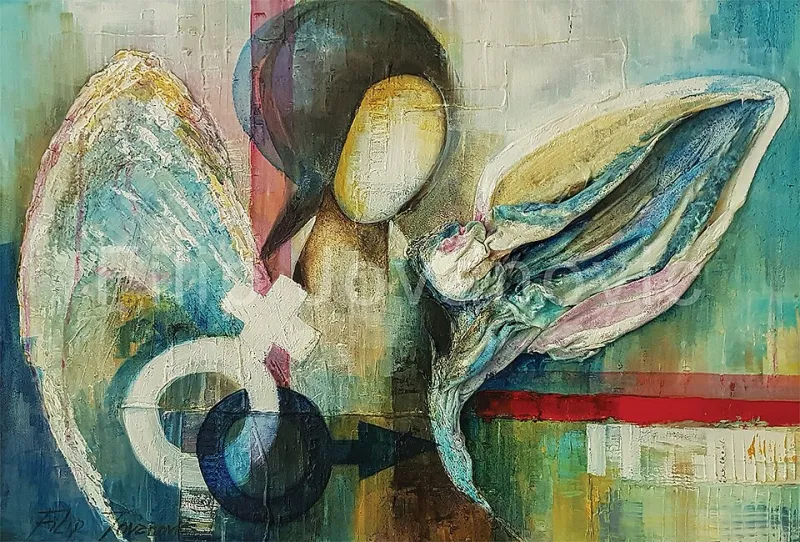
Photo: Filip Jovanović profesionalni umetnik, CC BY-SA 4.0, via Wikimedia Commons
Somewhere between Pantone's color of the year announcement and the latest wave of AI-generated aesthetic trends flooding your Instagram feed, it's easy to feel like your creative work is perpetually behind. Like there's a train leaving the station every six months, and if you're not on it, you're irrelevant.
That feeling is worth examining—because it's mostly a lie, and acting on it can quietly hollow out your work.
This isn't an argument against staying curious or informed. Knowing what's moving through the culture is part of being a thoughtful creative. But there's a meaningful difference between awareness and absorption—between understanding a trend and reflexively adopting it because everyone else seems to be.
The Real Cost of Trend-Chasing
Here's what happens when you try to keep up with everything: your portfolio starts to look like a mood board of the last eighteen months of design Twitter. Technically competent. Visually current. Completely indistinguishable from a hundred other portfolios.
Clients and audiences who are drawn to a strong personal aesthetic—the kind that makes someone say oh, that's definitely a [your name] piece—can't find that thread in work that's constantly pivoting to the next thing. You become a generalist in the worst possible way: not versatile, just reactive.
There's also a slower, more insidious cost. When you're always looking outward for creative direction, you stop developing the internal compass that makes a body of work coherent over time. That compass is hard to build and easy to lose. Once you've spent a few years deferring to trend cycles instead of your own instincts, you may find yourself genuinely unsure what your aesthetic is—separate from what's popular right now.
Trends Aren't the Enemy (But Blind Adoption Is)
Let's be clear: trends exist for a reason. They're often a response to something real in the culture—a shift in values, a reaction against what came before, a new technology that opens up previously impossible aesthetics. Brutalist web design wasn't arbitrary; it was a deliberate pushback against the slick, corporate sameness of early 2010s digital design. The return of maximalism in interior and graphic design makes sense as a response to years of minimalism-as-default.
Understanding why a trend is happening is genuinely useful creative intelligence. It tells you something about where the culture is, what people are hungry for, what they're reacting against. That context is worth having.
The question isn't whether you should pay attention to trends. It's whether any given trend has something to offer your specific practice, values, and aesthetic direction—or whether you're just feeling the social pressure to participate.
A Decision Framework That Actually Helps
When a new trend crosses your radar—whether it's a color palette, a motion style, a material finish, or a conceptual approach—run it through these questions before you start experimenting:
Does this trend solve a problem I've actually been having? Sometimes a new technique or aesthetic approach genuinely addresses something you've been struggling to express. That's different from adopting something because it's getting engagement. If the trend fills a gap, it's worth exploring. If it doesn't address anything real in your work, that's information.
Does it align with what I'm already drawn to? Look back at the work you've made when nobody was watching—personal projects, sketchbooks, the stuff you made before you had an audience. Does the trend rhyme with any of that? If there's a genuine resonance, it might represent a natural evolution. If it feels foreign to everything you've made instinctively, that's worth noticing.
Can I make it mine, or would I just be making a version of someone else's version? There's a difference between being influenced and being derivative. If your honest assessment is that you'd be producing a competent imitation of work you've seen elsewhere, pass. If you can see a way to bring something genuinely yours to the approach, it might be worth the experiment.
Will this still feel relevant to my practice in three years? Trend cycles in design move fast—what's everywhere today can feel dated in eighteen months. Ask yourself whether this direction has legs beyond the current moment, or whether it's tied to a very specific cultural instant. Timelessness isn't the only valid goal, but it's worth factoring in.
Building a Practice With a Long Memory
The creative professionals who build lasting, distinctive bodies of work tend to have one thing in common: they know their own references. They can tell you exactly which designers, artists, photographers, filmmakers, or movements shaped the way they see. And those references are usually pretty stable over time—not because these people stopped being curious, but because they know the difference between a genuine influence and a passing infatuation.
Building that kind of self-knowledge takes some deliberate effort. Spend time with your own archive. Look at the work you made five years ago, ten years ago. What themes keep showing up? What problems keep interesting you? What do you reach for when you have total creative freedom?
That's your core aesthetic. It doesn't mean you can't grow or change—it means you have a center of gravity to return to when the noise gets loud.
The Discerning Yes
The goal here isn't to become a creative hermit who ignores everything happening in the industry. It's to develop a more discerning relationship with what you let influence your work. To get better at the difference between a trend that genuinely speaks to something in your practice and one that's just loud.
The most interesting creative work tends to come from people who are deeply aware of the cultural moment and deeply committed to their own vision—and who've gotten good at knowing which is which. That's not a natural talent. It's a skill you build, slowly, by paying attention to your own responses and trusting them over time.
Stay curious. Stay informed. But stay yourself first.