Every 'No' Was a Map: How Rejection Helped Me Figure Out What I Actually Make

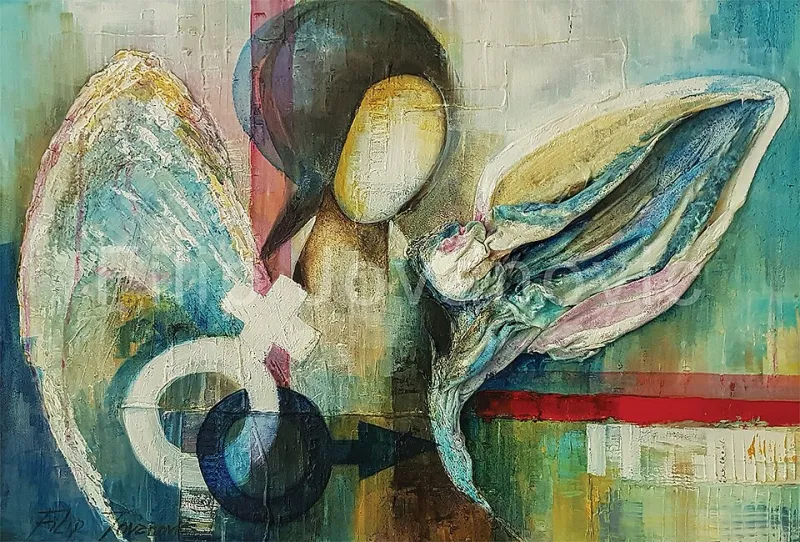
Photo: michel, CC BY 4.0, via Wikimedia Commons
There's a folder on my desktop I used to avoid opening. I called it "Archive" because that felt more dignified than what it actually was: a graveyard of rejected work. Pitches that got politely declined. Concepts I poured weeks into that clients ultimately passed on. A gallery submission that came back with a form letter so generic it almost felt worse than silence.
For a long time, I treated that folder the way you treat a bad haircut photo—you know it exists, but there's no reason to revisit it. Then one slow afternoon, I opened it. And what I found wasn't a record of failure. It was, weirdly, one of the most accurate portraits of myself as a creative that I'd ever looked at.
The Rejection Reel Is Real Data
Here's the thing nobody tells you early in your creative career: your successes are partly shaped by luck, timing, and whoever happened to be in the room. A client loves your work because it matched their mood that week. A piece gets picked up because a curator was on a particular kick. Success has a lot of variables you don't control.
Rejection, though? Rejection tends to be remarkably consistent. When I started actually cataloging what got turned down—not to wallow, but to look for patterns—I noticed something uncomfortable. A lot of my rejected work shared a sensibility. It leaned quieter. More conceptual. Less immediately commercial. The stuff that got passed over again and again had a certain restraint to it, a willingness to leave space and let the viewer do some work.
And the stuff that landed easily? Cleaner. More direct. Easier to sell in a sentence.
I had spent years unconsciously bifurcating my creative output—making what I thought I should make versus what I was actually drawn to. The rejection pile was full of the latter.
What 'No' Is Actually Saying
When a client passes on your concept, the instinct is to ask what was wrong with it. Wrong question. The better question is: what was right about it that didn't fit their needs?
There's a difference between work that's rejected because it's weak and work that's rejected because it's not for that particular person or platform. Most creatives conflate the two, and that conflation is where self-doubt gets its hooks in.
I had a branding pitch turned down by a mid-sized retail client a few years back. They wanted something bold, punchy, a little loud. I came in with something more considered—tighter typography, a muted palette, the kind of visual language that says we've thought about this carefully rather than look at us. They went with someone else. The right call for them, honestly.
But here's what I learned: I was incapable of making the loud version and meaning it. I tried. The sketches were there. They just felt hollow. That rejection didn't tell me I was bad at branding. It told me I was drawn to a specific kind of branding, and I should stop pretending otherwise.
The Pattern Is the Portrait
If you want to understand your creative identity—what you actually stand for, not what you've convinced yourself you stand for—pull your rejections. All of them. Look at them not as individual failures but as a body of evidence.
Ask yourself:
- What do these rejected pieces have in common visually or conceptually?
- What kind of client or audience consistently didn't respond to your instincts?
- What were you defending when you got feedback you didn't agree with?
That last one is key. The moments when feedback landed and you thought yeah, fair point versus the moments you thought they just don't get it—those are different. The second kind, the ones where you pushed back internally even while nodding politely, that's where your actual convictions live.
For me, the pattern was clear once I looked: I make work that rewards attention. I'm not interested in the quick grab. I'm drawn to things that reveal themselves slowly, that have a second layer you only see after sitting with it for a minute. That's not a flaw. It's a fingerprint. But it took a pile of rejections to show it to me plainly.
The Uncomfortable Upside
Accepting this kind of self-knowledge is genuinely uncomfortable, because it also means accepting that some markets, some clients, and some platforms are just not your audience. And in a culture that optimizes for broad reach and mass appeal, narrowing your lane can feel like losing.
It's not losing. It's positioning.
Once I stopped trying to make work that would be universally palatable—once I leaned into what the rejection pile had been telling me all along—something shifted. The right clients started finding me more easily because I was no longer sending mixed signals about what I do. My portfolio stopped trying to be all things. It got quieter, more specific, and somehow more confident for it.
The irony is that embracing what had been rejected made my work harder to reject going forward—because now it was going to people who actually wanted what I make.
What to Do With Your Own Archive
If you haven't done this exercise, I'd genuinely recommend it. Set aside a couple hours, pull every piece of work that didn't make it, and resist the urge to judge each one in isolation. You're looking for the thread.
You might find that your rejected work is genuinely weaker—and that's useful information too. But more likely, you'll find a coherent sensibility that kept showing up in places it wasn't wanted. That sensibility is yours. It's the thing you keep returning to even when the market isn't asking for it.
That's not a liability. That's your voice.
And the sooner you stop apologizing for it and start finding the people who need exactly that thing, the less time you'll spend building a rejection pile in the first place.