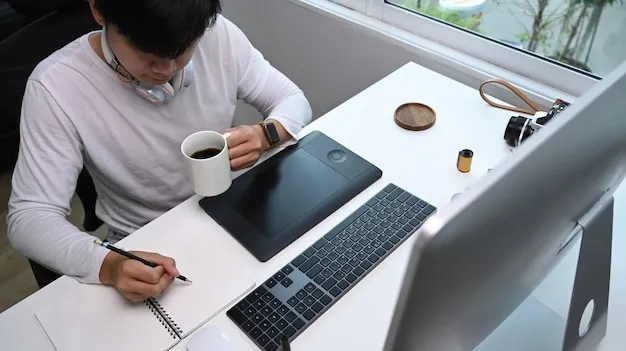
Other People's Fingerprints Made My Work More Mine
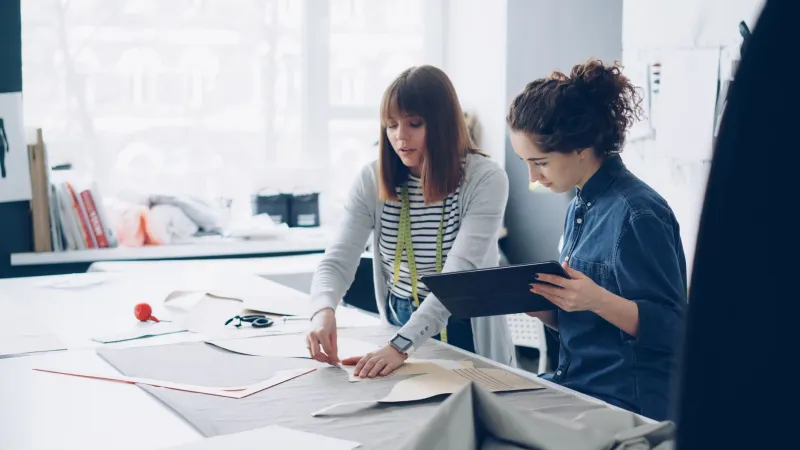
There's a version of the creative life that looks like a monk situation. You, alone in a studio, channeling something pure and untouched by the opinions of others. No clients pushing back. No collaborators nudging things sideways. Just you and your vision, uncompromised.
That version sounds great. It also doesn't really exist — and honestly, even if it did, I'm not sure it would produce the work you think it would.
Here's what I've actually found: every time I've worked alongside someone else — a client, another designer, a photographer with their own strong point of view — I've come out on the other side knowing my own voice better than when I went in. That's the paradox. Other people's fingerprints don't smudge your work. They reveal the shape of yours.
The Moment You Have to Explain Yourself
Solo work lets you live inside your own logic. You make a decision, it feels right, you move on. There's no checkpoint where anyone asks why.
Collaboration blows that wide open. Suddenly you're sitting across from someone — a client in a conference room, a co-creator on a video call — and they're looking at something you made and asking a totally reasonable question: why did you go this direction?
And you have to answer. Out loud. In real time.
That pressure is uncomfortable, but it's also clarifying in a way that nothing else really matches. When you have to articulate why you chose a certain palette, or why the layout breathes the way it does, or why the tone of the copy leans dry instead of warm — you're not just defending a decision. You're discovering what you actually believe. You're finding the principles underneath the instinct.
I've had conversations with clients where I started explaining a creative choice and realized, mid-sentence, that I was wrong about my own reasoning. The explanation didn't hold up. And that's valuable information. It means the decision was habit, not vision. Collaboration caught it before it became a pattern.
Friction Isn't Failure
When a collaborator pushes back — really pushes back, not just nitpicks but fundamentally questions a direction — there's a fork in the road. You can read it as a threat to your vision, or you can read it as a test of it.
The threat reading is the obvious one. Someone's trying to change your work. Resist. Protect.
But the test reading is more useful. If your vision is solid, it can withstand scrutiny. If it crumbles the moment someone asks a hard question, then what you had wasn't a vision — it was a preference. Preferences shift with the wind. Visions don't.
Think about the way a good editor works with a writer. The editor isn't there to rewrite the book. They're there to find the places where the writer's intent isn't landing — where the gap between what was meant and what was made is wide enough to trip a reader. A great editor makes the writer's voice more itself, not less. The same dynamic shows up in design, in visual art, in film. Collaboration, at its best, is editorial pressure applied to your own instincts.
Some of the most precise creative work I've seen — and made — came out of situations where someone pushed hard enough that I had to get very clear, very fast, about what I was actually trying to do.
When You Borrow Someone Else's Constraints
There's another angle here that doesn't get talked about enough: the way a collaborator's constraints can become creative fuel.
Working with another maker — someone who has their own aesthetic, their own process, their own non-negotiables — means you're operating inside a shared set of limits. You can't do everything you'd do alone. Some options are off the table. And that restriction, which sounds like a loss, is often where interesting things happen.
A few years back, I worked on a project with a photographer who had an almost stubborn commitment to natural light. No artificial fill, no reflectors, just whatever the space gave us. My instinct on that project would have been to control the light heavily. Her constraint meant I had to find other ways to create the visual tension I was after — through composition, through timing, through the relationship between subject and background.
The result didn't look like something I would have made alone. But the thinking behind it was sharper than what I usually brought to that kind of work. Her constraint forced me to solve a different problem, and solving that problem taught me something about my own approach that I wouldn't have found in a solo environment.
That's the gift of a strong collaborator. They make the sandbox smaller, and you get more creative inside it.
Staying Yourself While Letting Others In
None of this means you abandon your perspective the moment someone disagrees with you. There's a difference between being open to friction and being a pushover. The goal isn't to absorb every outside opinion and let it reshape your work. The goal is to stay curious about what the friction is telling you.
Some feedback is signal. Some is noise. Learning to tell the difference is its own skill, and it develops over time.
But here's a useful frame: if a collaborator's input makes you want to defend your choice, ask yourself what you're actually defending. Is it the work? Or is it your attachment to having been the one who made the decision? Those are very different things, and it's worth being honest about which one is driving the resistance.
When the pushback is genuinely about the work — when someone's pointing at something real — that's a conversation worth having. When it's just about preference or ego, you'll usually know. Your gut knows the difference between a challenge to your vision and a challenge to your comfort.
The Version of You That Comes Out the Other Side
Every significant collaboration I've been part of has left a mark on how I work — not on the aesthetic itself, but on the thinking underneath it. I understand my own instincts more clearly because I've had to defend them. I know which principles I'll hold and which I'll bend because I've been in rooms where the pressure was real.
That's not dilution. That's refinement.
The creative professionals whose voices feel the most distinct — the ones whose work you'd recognize in a lineup — aren't necessarily the ones who worked alone. They're the ones who stayed themselves under pressure. Who came through collaboration with their perspective intact, sharpened rather than softened.
Working with others doesn't make you less you. Done right, it makes you more you than you could have gotten to on your own.