That Diploma on Your Wall Won't Close the Deal — Your Portfolio Will
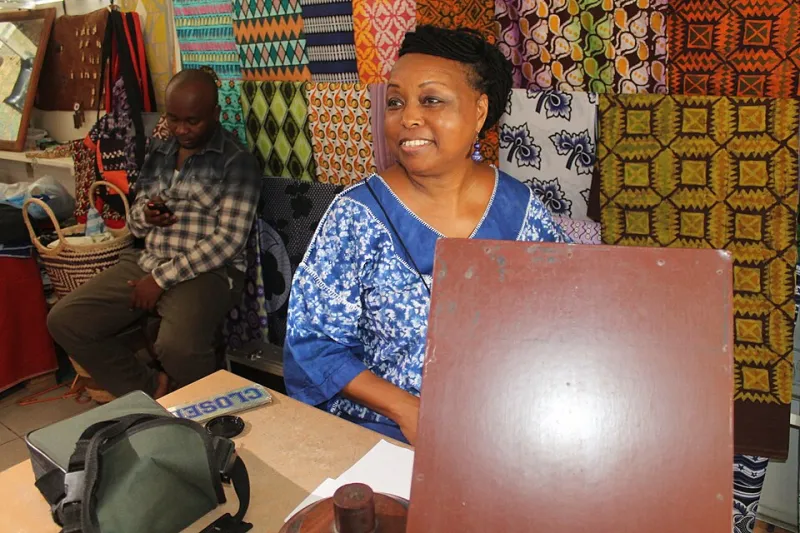
Photo: Thukuk, CC BY-SA 4.0, via Wikimedia Commons
There's a specific kind of anxiety that hits creative people around the time they're wrapping up school. You've spent four years — sometimes more — building toward a credential that feels like it should matter. And for a minute, it does. It gets you in the room. It gives you something to put on a résumé. It signals to a certain kind of client that you completed something.
But then you ship your first real project. A logo for an actual business. A brand identity that goes live on a website people actually visit. A mural that gets photographed and shared. And suddenly, that diploma starts collecting dust in a way that has nothing to do with neglect.
The credential didn't disappear. It just got outranked.
What School Actually Sells You
Let's be honest about what a design degree or fine arts program is really selling. It's structured exposure — to theory, to tools, to feedback in a controlled environment. That's genuinely valuable, especially early on. You learn how to talk about work. You develop a vocabulary for critique. You get introduced to art history, color theory, typography rules you'll spend the next decade selectively breaking.
But here's the thing schools rarely say out loud: none of that is proof of competence to the people who will eventually pay you. It's proof that you were enrolled somewhere.
Clients — real ones, not hypothetical ones — don't hire you because of where you went. They hire you because of what they can see you've already done. Peers in your industry don't respect your MFA. They respect the campaign you pulled off with a tight budget, the rebrand that actually moved the needle, the illustration series that took on a life of its own online.
The credential is a starting point, not a destination.
The Unlearning Problem
Some of the most interesting creative careers I've watched unfold have one thing in common: a period of deliberate unlearning. Designers who went through rigorous academic programs sometimes describe feeling boxed in by the rules they internalized — the grid systems, the approved color relationships, the "correct" way to approach a brief. They had to actively dismantle some of that structure before they could build something that felt genuinely their own.
That's not a knock on education. It's a recognition that creative work, at its best, is personal. And institutions — by their nature — aren't built to produce personal work. They're built to produce graduates who understand a shared language.
The creatives who find their footing fastest are usually the ones who treat school as one input among many, not the defining input. They're sketching outside of class. They're taking on side projects that have nothing to do with their coursework. They're failing in small, low-stakes ways that teach them more than any critique session.
When Credentials Still Matter (and When They Don't)
Let's not pretend credentials are entirely useless. There are contexts where they carry real weight — applying for certain institutional grants, landing a teaching position, navigating corporate creative departments that have HR gatekeeping built into their hiring process. In those situations, a degree can be the difference between getting your application read and having it filtered out.
But that's a narrower slice of the creative world than most people think when they're 22 and signing student loan paperwork.
For freelancers, independent designers, working artists, and anyone building a practice around their own name? The portfolio is the credential. Full stop. A client hiring someone to design their restaurant's visual identity isn't thinking about your GPA. They're looking at whether you've done something that makes them feel like you understand what they need.
The honest question isn't "do credentials matter?" It's "who are you trying to impress, and what do they actually care about?"
Shipping Changes Everything
There's something that happens when you put real work into the world — work with stakes, work that someone paid for or depended on — that no academic project can replicate. You learn how to handle a client who changes their mind three days before a deadline. You figure out how to defend a creative decision without being defensive. You discover which parts of your process hold up under pressure and which parts were always a little shaky.
That knowledge doesn't show up on a transcript. It shows up in how you talk about your work, how you handle a discovery call, how you navigate the inevitable friction of a real creative engagement.
And here's the thing — other creative professionals can feel it. When someone has shipped real work, there's a groundedness to how they talk about process. They're not speaking in the abstract. They've been in the weeds. That's immediately recognizable to anyone who's been there too.
Building the Only Credential That Compounds
A degree is static. You earn it once and it sits there. Your portfolio, on the other hand, compounds. Every project you complete adds to a body of evidence that tells a story about who you are as a creative — what you care about, what problems you're drawn to, how your thinking has evolved.
The most powerful version of a creative career is one where the work itself becomes the argument. Where someone can look at what you've made over time and understand your point of view without you having to explain it. That's not something any institution can give you. It's built project by project, decision by decision.
So if you're early in your career and you're holding onto that credential like a safety net — lean into it where it genuinely helps, but don't let it become a substitute for shipping. The work is the proof. Everything else is just paperwork.