When the Client Was Right: How Outside Pressure Forged Better Work
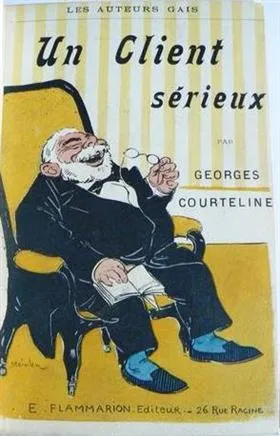
Photo: Théophile Steinlen, Public domain, via Wikimedia Commons
There's a version of this story where I'm the hero who held the line, defended the vision, and delivered exactly what I'd originally pitched. That version is a lot more satisfying to tell at dinner parties.
But the true version is messier — and honestly, more useful.
A few years back, I was deep into a branding project for a mid-sized retail client based out of the Pacific Northwest. I'd handed in what I thought was some of my cleanest, most considered work to date: a visual identity that leaned into muted earth tones, restrained typography, and a lot of intentional negative space. It felt right. It felt mine.
The client came back with notes. A lot of them.
They wanted warmer colors. Bolder type. More energy, they said. Less "museum," more "market."
My first reaction — if I'm being honest — was something between wounded and dismissive. I'd done the research. I understood their audience. What did they know about design?
Turns out? Quite a bit.
The Difference Between Defending Your Vision and Being Defensive
Here's something I had to learn the hard way: there's a real distinction between advocating for a creative decision and protecting your ego. Both can look identical from the outside. Both involve pushing back on feedback. But one is rooted in craft, and the other is rooted in fear.
When I finally sat down and actually listened to what my client was saying — not just catalogued their complaints while mentally preparing my rebuttal — I started to hear something different. They weren't asking me to make ugly work. They were telling me that my interpretation of their brand didn't match the experience they were trying to give their customers.
That's a design problem. And design problems are solvable.
I went back in. I kept the structural bones of the original concept — the grid logic, the spatial rhythm, the underlying restraint — but I pushed the palette warmer and gave the headline type more presence. The result was something neither of us would have landed on independently. It had my fingerprints and their knowledge of their own people.
It was better. I didn't love admitting that, but it was.
What Constraints Actually Do to Creative Work
There's a reason so many designers, writers, and artists talk about constraints like they're gifts. Unlimited freedom sounds great until you're staring at a blank canvas at 11 p.m. with a deadline in the morning.
Client feedback — even the clunky, poorly articulated kind — introduces friction. And friction, when you work with it instead of against it, has a way of clarifying what actually matters in a piece.
When a client says "this doesn't feel right," they're rarely wrong about the feeling. They might be completely wrong about the solution they're proposing. But the feeling? That's data. Your job is to translate emotional feedback into creative decisions.
I've started thinking of it like physical resistance training. The pushback isn't trying to break the work — it's making it stronger by forcing it to hold up under pressure.
The Redesign That Taught Me to Ask Better Questions
Another project, different client. This one was a logo for a small food and beverage brand trying to carve out space in an already crowded craft market. I'd gone bold and abstract — something that would read well at scale, stand out on a shelf, turn heads.
First round of feedback: "We love it, but our customers might not get it."
Instead of defending the abstraction (which was my instinct), I asked a question I'd never thought to ask before: What do your best customers already love about you?
The answer changed everything. Their most loyal buyers weren't seeking novelty — they were seeking authenticity. They came back week after week because the product felt handmade, personal, like it came from someone's kitchen rather than a factory floor.
My original logo was slick in a way that actively worked against that story.
So I redesigned. I kept the bold color blocking but introduced a hand-drawn element — imperfect, warm, a little rough around the edges. The kind of mark that looks like someone made it because they meant it, not because an algorithm spat it out.
The client cried at the final presentation. In a good way.
That doesn't happen when you defend the wrong hill.
Learning to Hear What's Not Being Said
Most clients don't speak fluent design. That's not a criticism — it's just reality. When someone says "make it pop" or "it feels cold" or "can we try something different," they're not giving you a creative brief. They're giving you a feeling, a gut reaction, a piece of honest human response to the thing you made.
Your job — and this took me an embarrassingly long time to internalize — is to become a translator.
"It feels cold" might mean: the color temperature is too blue. Or the type is too rigid. Or there's not enough visual warmth to suggest human involvement. Any one of those is a fixable problem. But if you hear "it feels cold" and walk away thinking this client just doesn't appreciate minimalism, you've stopped doing your job.
The best creative professionals I know are relentlessly curious about feedback, even when it's uncomfortable. Especially when it's uncomfortable.
What This Means for Your Creative Identity
None of this is an argument for becoming a yes-machine who executes whatever a client wants without pushback. That's not design — that's order-taking, and it doesn't serve anyone well.
Your creative identity is real. Your instincts are worth protecting. There will absolutely be moments when you need to hold the line — when a client's suggestion would genuinely compromise the integrity of the work or undermine the very thing that makes it effective.
But here's the thing: knowing when to hold that line requires a certain amount of intellectual honesty about why you're holding it.
Is it because the work will suffer? Or is it because you don't want to admit the work could be better?
That's the question worth sitting with.
The client who pushed back on my earth-toned branding project didn't change my creative identity. They sharpened it. They forced me to understand which parts of my vision were actually essential and which parts I was just attached to out of habit.
Turns out, those are very different things.
And learning to tell them apart? That might be the most important creative skill there is.